


- Interior Design Styles & Trends
- Garden & Outdoor Living
- Luxury Home Gifts
- Furniture
- Coffee Tables
- Side Tables
- Luxury Armchairs
- Luxury Sofas
- Luxury Cabinets & Storage Furniture
- Console Tables
- Dining Tables
- Dining Chairs
- Luxury Bar Stools
- Stools, Pouffes & Benches
- Ceramic Stools
- Bedside Tables & Cabinets
- Dressing Tables
- Shelving Units & Bookcases
- Desks
- Bar Cabinets
- Bar Carts & Drinks Trolleys
- Plinths & Pedestals
- Decorative Room Dividers
- Furniture by Material
- Furniture by Room
- Luxury Home Accessories
- Luxury Lighting
- All products
- K&B London Gold Label
- New arrivals
- Sale
Why K&B? London
We select furniture, lighting and decorative pieces distinguished by sculptural form and considered finishes
Our collections are curated for cohesive interiors with individual character, far removed from mass-market design
Filters
Vendor
Price
-
from
To
Discover elegant TV units designed for contemporary and classic living rooms. The K&B London collection includes long media cabinets, wooden TV stands and statement designs with decorative fronts, shelving and concealed storage for entertainment equipment.
TV Units
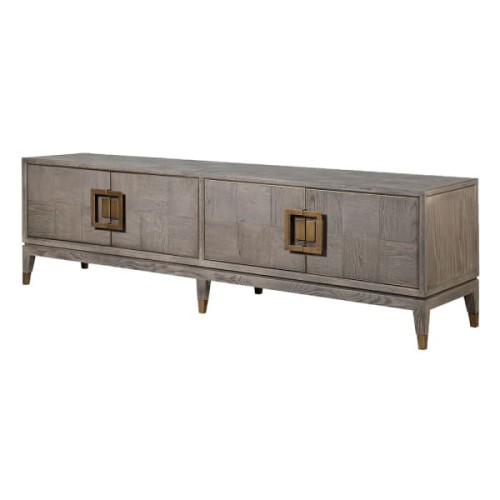
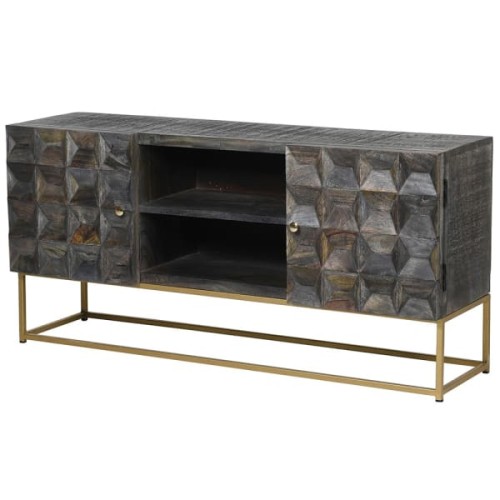
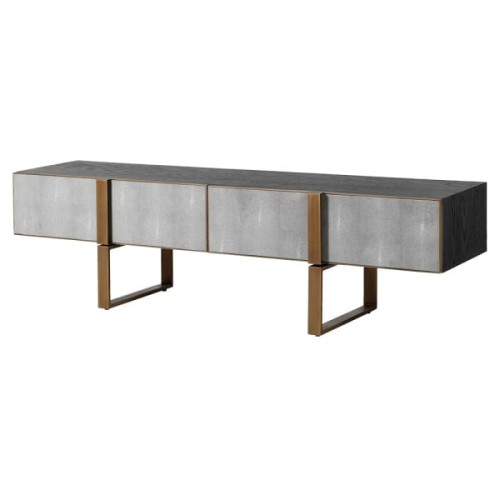 Enderby II 180cm TV Stand – Grey Shagreen Oak Media Unit with Gold Iron Details
£1,398.00
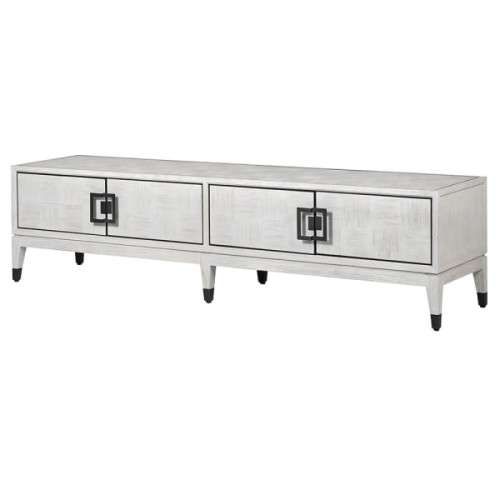
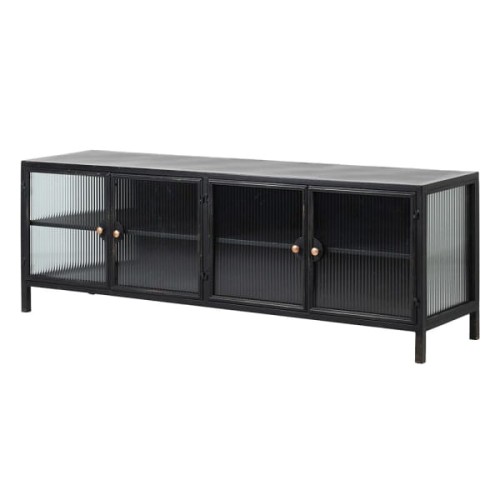
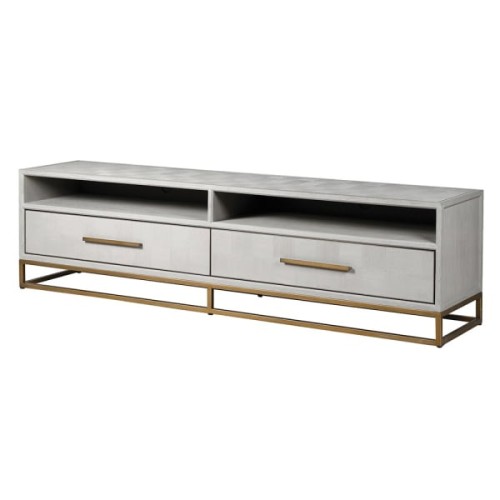
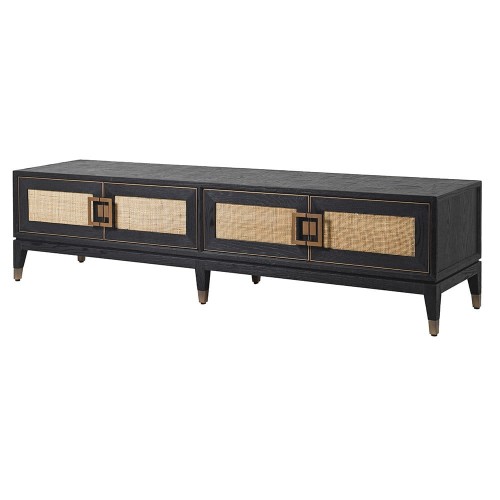
TV Units for Elegant and Functional Living Rooms
TV units help create an organised entertainment area by providing a considered setting for the television, soundbar, games console, streaming equipment, router and other media devices. A carefully selected design conceals cables and smaller accessories while contributing to the overall character of the living room.
The K&B London collection includes TV units for living rooms in a variety of proportions, sizes and finishes. Individual models may feature cupboards, drawers, open compartments, adjustable shelving and cable-management openings, allowing the furniture to accommodate both simple media arrangements and more extensive entertainment systems.
A contemporary TV cabinet does not need to function solely as a technical base for the screen. Decorative fronts, natural timber grain, fluting, metal bases and carefully balanced proportions allow the furniture to become an important feature within the interior.
How to Choose a TV Unit
When choosing a TV unit, consider the size of the television, whether it will be wall-mounted or placed directly on the furniture, and the number of devices that need to be accommodated. The dimensions of the room, the viewing distance and the available circulation space should also influence the final decision.
Before purchasing, check:
- the overall width, height and depth of the TV unit,
- the width and depth of the television base,
- the maximum recommended load for the top,
- the number of cupboards, drawers and open compartments,
- the internal dimensions for media equipment,
- whether cable-management openings are included,
- the ventilation available for electronic devices,
- the opening mechanism of the doors and drawers,
- assembly and wall-fixing requirements.
Where the television will stand directly on the furniture, the entire base must fit securely on the top. The television weight should also remain within the stated load limit. For a wall-mounted screen, the TV unit may be lower and can be selected primarily for storage and decorative balance.
How Wide Should a TV Unit Be?
A TV unit that is wider than the television generally creates the most balanced arrangement. Leaving visible space on either side of the screen gives the composition a more stable and considered appearance.
The actual television width should be checked in the manufacturer’s specification, as the screen size measured diagonally does not indicate the complete width of the appliance. Two televisions with the same screen size may have different frames, feet and overall proportions.
A long TV unit works particularly well against a wide wall and creates a strong horizontal foundation beneath the screen. In a smaller room, a shorter or shallower design may be more suitable, provided that it still offers enough storage and support.
Long TV Units for Spacious Living Rooms
Long TV units are ideal for larger screens and spacious living rooms with generous media walls. Their width provides additional storage and helps establish a clean, horizontal composition across the room.
A broad unit may accommodate several devices, games, controllers, remote controls and media accessories while still leaving room for selected decorative objects. A table lamp, small sculpture, books or a low vase can be added, provided that they do not obstruct the screen.
Before ordering a large TV cabinet, measure not only the intended wall but also the full delivery route. Check doorways, corridors, staircases and lifts, and confirm whether the furniture arrives assembled or requires installation.
Modern TV Units
Modern TV units are often defined by clean lines, low proportions and restrained detailing. They may feature smooth doors, concealed handles, push-to-open mechanisms and slim metal legs.
Black, white, beige, taupe, grey and natural timber finishes work particularly well in contemporary living rooms. Neutral colours allow the unit to sit comfortably alongside sofas, coffee tables, lighting and other furniture without creating an overly coordinated effect.
A minimalist form can still have a distinctive decorative character. Fluted surfaces, geometric fronts, visible timber grain and subtle metallic accents can give the furniture depth without excessive ornamentation.
Luxury TV Units with Statement Design
A luxury TV unit combines practical storage with a more distinctive decorative presence. Sculptural fronts, textured surfaces, carefully selected proportions and metallic details can turn the media cabinet into a statement feature.
Within a calm and neutral living room, a design with an expressive pattern may become the principal focus of the media wall. Where the fronts are already highly decorative, the surrounding styling should remain restrained.
A statement TV cabinet works particularly well against a plain wall, subtle wall covering or understated panelling. Carefully positioned lighting may further emphasise the texture and form of the furniture.
Wooden TV Units
Wooden TV units introduce natural texture and warmth into the living room. Depending on the design, they may be made from solid timber, veneer, engineered wood or a combination of materials.
Pale timber finishes complement Scandinavian, organic and contemporary interiors. Darker woods, walnut tones and deep brown finishes give the furniture a more formal and refined appearance.
Visible grain can become the main decorative feature of the piece. Natural timber and veneer may vary in colour, pattern and texture, giving each item an individual appearance.
TV Units with Metal Details
Metal bases, handles and trims can reinforce the modern, industrial or decorative character of a TV unit. Black metal introduces a sharper architectural element, brass and gold tones add warmth, while silver and chrome suit cooler interior palettes.
The metal finish can be repeated subtly through a coffee table, lamp, shelving unit or wall decoration. It does not need to match every other detail exactly, but related tones will help create visual continuity.
Fluted TV Units
A fluted TV unit introduces rhythm, texture and depth to the entertainment area. Vertical, curved or geometric grooves change in appearance as light moves across the surface.
Fluted fronts work particularly well in natural timber, black, beige and taupe finishes. They give a low, simple cabinet a more sculptural quality while retaining a contemporary appearance.
Textured surfaces may require more regular dusting than smooth doors. A soft cloth or gentle brush can be used to remove dust from recessed areas, following the care guidance for the individual product.
Black TV Units
A black TV unit creates a strong foundation beneath the screen and works particularly well with the dark surface of the television when it is switched off. It suits contemporary, industrial, minimalist and monochrome interiors.
Matt black has a calm and architectural quality, while gloss finishes reflect more light and create a more formal effect. Fluting or geometric detailing can prevent a wide black cabinet from appearing overly heavy or flat.
A black unit can be paired with a pale wall, timber, stone and neutral upholstery. In darker rooms, considered lighting around the media area will help maintain visual balance.
White, Cream and Beige TV Units
White, cream and beige TV units help maintain a lighter appearance within the room. They are particularly suitable for neutral interiors and spaces where a large dark cabinet might feel visually dominant.
Pale fronts work well with natural timber, stone, bouclé upholstery and warm metallic details. They also provide a quiet background for the dark television screen and stronger decorative accents.
Modern-Classic TV Units
Modern-classic designs combine orderly proportions with refined contemporary detailing. They may feature subtly panelled or fluted fronts, symmetrical cupboard layouts, elegant handles and bases in black, brass or gold tones.
Cream, beige, black and dark timber are particularly suitable for this style. A modern-classic TV unit can be combined with decorative lighting, an upholstered sofa and coffee tables with glass or stone surfaces.
Balance is essential. Where the furniture has decorative fronts, the wall behind the television and the surrounding accessories should remain relatively understated.
Glamour and Art Deco TV Units
Glamour TV units may feature polished finishes, mirrored details, metallic elements and decorative door patterns. Art Deco-inspired designs often use symmetry, strong geometry and contrasting finishes.
These pieces complement velvet, marble, glass and elegant lighting. To retain a refined atmosphere, avoid placing too many highly reflective accessories around the screen.
Industrial and Loft-Style TV Units
Industrial living rooms suit furniture that combines timber with black metal, deeper colours and clear architectural lines. The TV unit may relate to a metal bookcase, coffee table or dark window frames.
An industrial media cabinet does not need to feel harsh. Natural grain, textured fronts and balanced proportions can soften the appearance and make the furniture more suitable for a comfortable seating area.
TV Units for Wall-Mounted Televisions
A wall-mounted television allows the surface of the TV unit to remain relatively clear and creates a more streamlined composition. The cabinet can still provide storage for devices, remote controls, cables and smaller accessories.
The height of the screen should be planned in relation to the seating position and eye level rather than being raised simply to make space for decorative objects.
Cables may be concealed within the wall, placed inside a cable cover or routed behind the furniture. The position of sockets and connections should be considered before the television and cabinet are installed.
TV Stands for Freestanding Televisions
Where the television stands directly on the furniture, the top must be sufficiently wide, deep and strong. The entire television base should sit securely on a stable surface.
Leave adequate space around the television and avoid placing tall objects close to the screen. In homes with children or pets, appropriate anti-tip solutions should be used in accordance with the television manufacturer’s guidance.
TV Units for Games Consoles
When choosing a media unit for a games console, check the dimensions of the open compartment, the available airflow and the ease of connecting cables. Equipment should not be placed inside a tightly enclosed cabinet where heat cannot escape.
Controllers, headphones, games and charging cables can be stored in drawers and cupboards. Before selecting a design, confirm that all doors can be opened easily without moving other devices.
TV Units with Space for a Soundbar
A soundbar may be positioned on top of the cabinet or inside a sufficiently wide open compartment. It should not be concealed behind a solid door or blocked by decorative accessories, as this may affect sound projection and remote-control operation.
Compare the width, height and depth of the soundbar with the available space before purchasing the unit. Allow additional room for cables and connections.
Ventilation for Media Equipment
Electronic equipment can generate heat, so a TV cabinet should allow suitable airflow. Games consoles, amplifiers, routers and streaming devices should not be placed in tightly enclosed spaces without ventilation.
The recommended clearances should be checked in the instructions supplied with each device. Ventilation openings must not be blocked by books, cables or other stored items.
Cable Management and Media Organisation
Carefully planned cable management helps preserve the clean appearance of the entertainment area. Openings in the rear of the unit allow equipment to be connected without leaving large groups of cables visible.
Cables can be labelled and grouped to make future changes easier. Extension leads should not be covered or positioned in a way that restricts ventilation.
Before placing the TV unit, check the position of power sockets. The cabinet should not completely prevent access to the electrical installation.
TV Units for Small Living Rooms
In a compact living room, choose a design with controlled depth, suitable width and an efficient internal layout. Raised legs can make the cabinet appear visually lighter by allowing more of the floor to remain visible.
One well-designed media unit may replace several smaller storage pieces and help reduce visual clutter. Closed fronts are particularly useful for concealing accessories and equipment.
Keep the styling of the top restrained. A small lamp or one sculptural object may be sufficient to complete the arrangement.
TV Units for Large Living Rooms
A spacious living room can accommodate long TV units and designs with more decorative fronts. The cabinet may occupy a significant part of the wall and create a strong base for a larger screen.
In a large interior, the TV unit can be combined with shelving, display cabinets or wall panelling, provided that the proportions and design language remain coherent. Avoid filling every part of the wall with furniture and accessories.
How to Style a TV Unit
The entertainment area should remain functional, so decorative objects should not obstruct the screen, remote-control sensors or ventilation openings.
A TV unit may be styled with:
- a small table lamp,
- a vase with a restrained silhouette,
- a compact sculpture or figurine,
- a small group of books,
- a decorative bowl,
- a low tray,
- a small indoor plant.
Leave part of the surface clear. A limited number of objects helps preserve balance between the screen, furniture and surrounding decoration.
What Can Be Stored in a TV Cabinet?
Depending on its construction, a TV unit may be used to store:
- remote controls and games controllers,
- games and films,
- headphones,
- cables and chargers,
- equipment manuals,
- networking accessories,
- books and albums,
- smaller items used within the living room.
Devices requiring ventilation should be positioned in accordance with the manufacturer’s instructions. Smaller accessories can be organised using boxes or drawer organisers.
Safe Positioning of a TV Unit
The furniture should stand on a level surface and be adjusted correctly where levelling feet are provided. Depending on the design, wall fixing may be required in accordance with the manufacturer’s instructions.
Do not exceed the recommended load for the top or internal shelves. Heavier equipment should normally be positioned in the lower sections, provided that ventilation requirements are met.
Children should not be allowed to climb on the furniture or open drawers. A freestanding television should also be secured against tipping where appropriate.
How to Care for TV Units
Care requirements depend on the material and finish. Dust should generally be removed using a soft, dry or lightly damp cloth. Abrasive sponges and strong cleaning products should be avoided unless recommended for the specific surface.
Remove spills promptly. Use suitable coasters or protective pads beneath vases, planters and decorative objects to reduce the risk of marks, scratches and discolouration.
Before cleaning near electrical equipment, disconnect devices from the power supply and avoid using damp materials close to cables and sockets.
TV Units from K&B London
The K&B London collection includes modern TV units, long media cabinets, wooden TV stands, black and beige designs, and statement pieces with fluted or decorative fronts.
A variety of dimensions, finishes and storage layouts makes it possible to choose suitable furniture for a compact living room, spacious house, contemporary apartment or refined entertainment area.
A carefully selected TV unit organises equipment and cables, provides concealed storage and creates an elegant foundation for the entire media arrangement. Before purchasing, compare its dimensions with the television, devices and available space.
Frequently Asked Questions
How wide should a TV unit be?
A TV unit generally looks best when it is wider than the television and leaves visible space on both sides. Compare the actual width of the screen with the furniture rather than relying only on the television’s diagonal measurement.
How high should a TV unit be?
The appropriate height depends on the seating position, viewing distance and whether the television is wall-mounted or placed on the cabinet. The screen should be positioned at a comfortable viewing level.
Can a television stand directly on a TV unit?
Yes, provided that the complete television base fits securely on the top and the appliance does not exceed the stated weight limit. The television should also be protected against tipping where required.
Can electronic equipment be kept behind closed doors?
Only where sufficient airflow and practical access are available. Follow the equipment manufacturer’s instructions regarding ventilation and required clearances.
How can cables be concealed behind a TV unit?
Use cable-management openings, cable covers, clips or wiring concealed within the wall. Access to sockets and electrical connections should remain possible.
Which TV unit is best for a small living room?
A shallower design with closed storage and an efficient internal layout is often the best choice. Pale finishes or slim raised legs may make the cabinet appear visually lighter.
